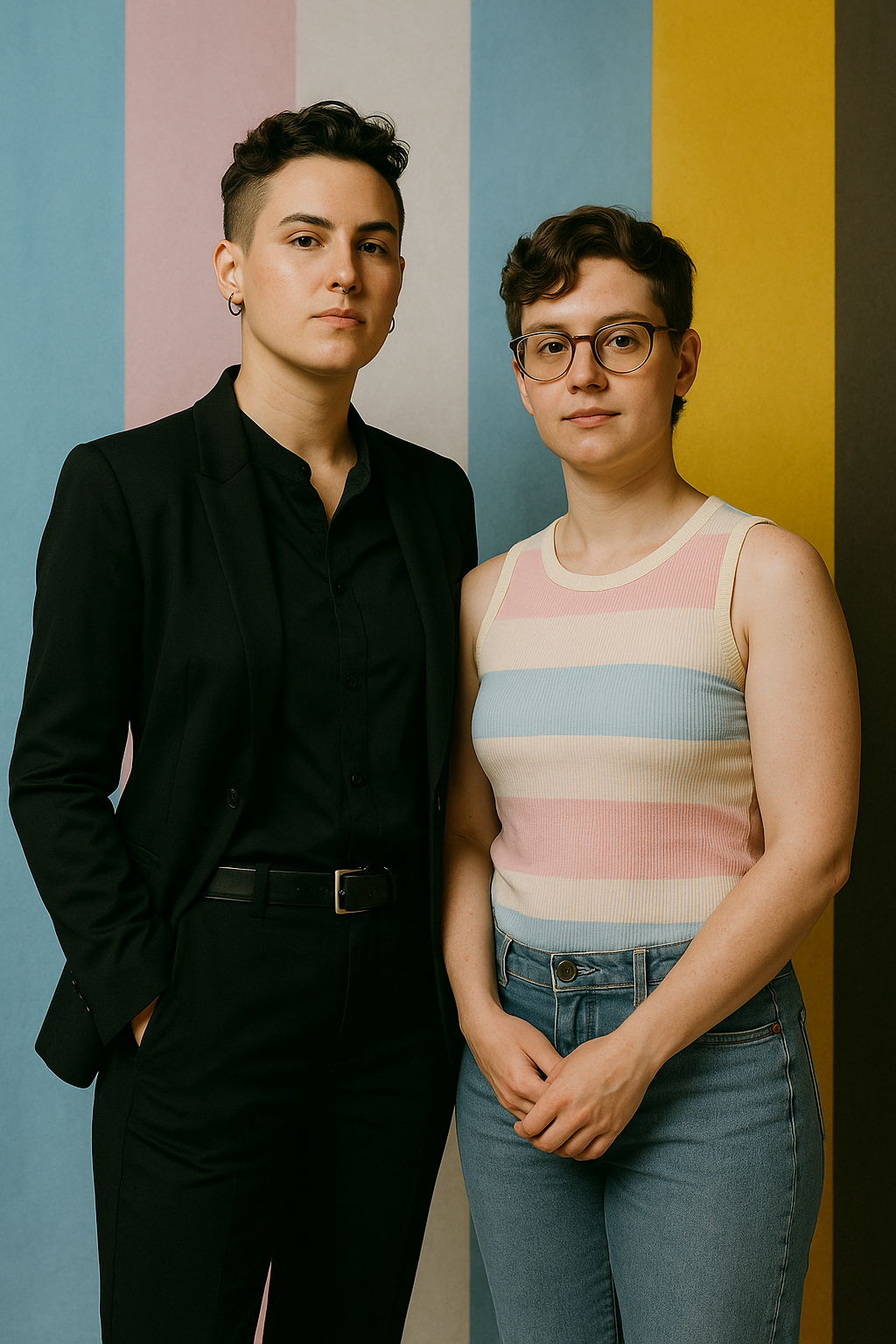
Kink has long thrived in the shadows—disrupting the norms, flipping scripts, and redefining intimacy. Yet, even in its most rebellious corners, traditional gender roles have often lingered. Today, a new wave of dominance and submission is emerging, powered by non-binary and trans individuals demanding visibility, respect, and their rightful place in the dungeon.
Welcome to the future of kink: one where power has no pronouns.
Breaking Stereotypes in the Dungeon
In classic BDSM narratives, domms were often hyperfeminine vixens, and submissives neatly slotted into gendered roles. But what happens when a domm is non-binary, masculine, femme, fluid—or something else entirely? What happens when a trans sub commands attention not with passivity, but with authentic vulnerability and choice?
These are not hypotheticals. This is reality in 2025’s inclusive kink spaces.
Inclusive BDSM acknowledges that power exchange is about consent, connection, and mutual trust—not gender. And when non-binary and trans folks step into dominant or submissive roles, they often bring a radically refreshing perspective on what control and surrender truly mean.
Visibility Matters: Why Representation Changes Everything
Platforms like Domin8trix have become crucial in creating safer, more inclusive erotic ecosystems. Visibility in fetish culture doesn’t just validate identities—it reimagines them.
By amplifying non-binary and trans domms, tops, switches, and submissives, we challenge outdated notions of who gets to wield the crop—or wear the collar.
On our blog, we’ve spotlighted diverse experiences from across the spectrum, proving that BDSM isn’t just inclusive—it’s evolutionary. Because when every body, identity, and dynamic is respected, everyone plays harder and safer.
The Role of Queer Kink in Cultural Liberation
Queer kink isn’t just about sex—it’s a political act. It subverts heteronormativity, reclaims agency, and offers spaces where people can safely explore power, pain, and pleasure on their terms.
For non-binary and trans participants, BDSM can be a space of gender euphoria, where roles aren’t restricted by labels, but rather informed by fluid dynamics and emotional intelligence.
As author and activist kink educator Jimanekia Eborn puts it:
“Kink is one of the few places where I’ve seen people actively ask: ‘Who are you right now, and how do you want to be treated?’ That’s powerful.”
Tips for Creating an Inclusive Scene
Want your play to be more gender-diverse and affirming? Start here:
- Ditch assumptions: Ask for pronouns and preferred titles—don’t guess.
- Customise language: “Sir”, “Mistress”, or “Your Royal Enby”—titles are personal and powerful.
- Check your protocols: Make sure your rules and rituals aren’t reinforcing gender binaries.
- Celebrate fluidity: Don’t police presentation or roles; encourage experimentation and evolution.
- Educate yourself: Follow queer educators, attend inclusive workshops, and listen—really listen.
Inclusive kink isn’t a trend. It’s a revolution.
Conclusion: Owning Power Without Boxes
Non-binary and trans kinksters aren’t here to play by the rules—they’re here to rewrite them. And in doing so, they’re helping us all see that dominance doesn’t need to be masculine, and submission doesn’t need to be feminine. It just needs to be consensual, respectful, and hot.
If you’re ready to explore a world where identity is expansive and pleasure is inclusive, you’re not alone.
Power has no pronouns.

I enjoy what you guys tend to be up too. This kind of clever work and exposure! Keep up the terrific works guys I’ve added you guys to my blogroll.
Thank you for taking the time to share this. I’m glad the writing stood out to you and sparked enough interest to want to pass it on. This piece was written to explore movement as an idea — power, presence, and expression — in a thoughtful, analytical way, so it’s always encouraging to hear when the themes resonate beyond the immediate context of the blog. I appreciate you reading and engaging with it.